A household budget is a map of this month, not a personality test.
Start with money that actually arrived. Then list the bills that leave whether you feel organised or not. Everything else is negotiation with yourself.
Most UK households already have a budget. It just lives in Direct Debits, a current-account overdraft and a vague sense that “this month was tight”. Writing it down does not make you a different person. It makes the tight month visible in pounds, which is the only unit a landlord, energy supplier or grocer accepts.
Cunealriva treats a personal budget as three columns: money in, money that must go out, and money you still get to choose. The first two columns are facts. The third is the only place lifestyle advice belongs.
Use net pay, not the salary on the contract
UK pay arrives after income tax, National Insurance and, for many people, student loan deductions. Pension contributions via salary sacrifice or a net-pay arrangement also reduce the figure that hits the current account. Budget from that landing figure. If you are paid four-weekly, do not pretend it is a calendar month: there are 13 four-week cycles in a year, which is one “extra” pay day you can assign to council tax catch-up, an emergency fund or a known annual bill.
Add other income only when it is regular enough to rely on: Universal Credit, child benefit, maintenance, a stable side income. A one-off overtime payment belongs in a sinking fund or the emergency jar, not in next month’s rent line.
Categories that match a British statement
Imported 50/30/20 sheets collapse council tax into “housing” and forget the TV licence. Use headings your bank already understands:
Immovables
Rent or mortgage (including service charges)
Council tax (check the instalment months)
Gas and electricity
Water and sewerage
Buildings and contents insurance
Broadband, mobile, TV licence
Minimum debt repayments
Childcare that keeps you in work
Household running
Groceries and household shop
Travel: rail, bus, fuel, parking
Prescriptions, dentistry, opticians
School costs and activities
Pets
Subscriptions you still use
Gifts and family occasions
A small cash buffer inside the month
The first ninety minutes
Open the last 30 days of your current account and any credit card. Write every outgoing into one of the headings above. Do not recategorise yet. The point is a complete list, including the £2.99 you forgot. Then copy last month’s pay. Subtract. The remainder is either saving capacity or a deficit. Both answers are useful.
If you share a household, do this together once. Separate “yours, mine and the house” only after the house is funded. Joint bills paid from one person’s account are a common reason a budget looks fine on paper and rotten in real life.
A worked sketch: Birmingham renter
Take-home pay £2,450. Room in a shared house in B31, £720 including some bills but not council tax. Single-person council tax after discount, about £130 a month when spread over ten instalments (budget it over twelve if you want quieter months). Energy contribution to the house, £55. Water, £28. Food, £220 because they eat most dinners at home. Travel on National Express West Midlands and the odd train, £90. Phone and broadband share, £35. This household has about £1,170 left before leisure, clothes, gifts and saving. That leftover is not “spare”. It is the only money that can become an emergency fund, a first-month rent buffer or a trip home.
The sketch is not a recommendation. Birmingham rents, bands and travel cards move. The value is the shape: housing and local bills first, food next, then a remainder with a name.
Pay cycle versus calendar
Council tax in England is commonly billed over ten months, typically April to January. Energy and broadband leave every month. A four-weekly salary will not line up with either. The practical fix is a bills account: on payday, move the month’s immovables in one standing order, even if some of those bills leave later. You are no longer surprised by the 1st of the month.
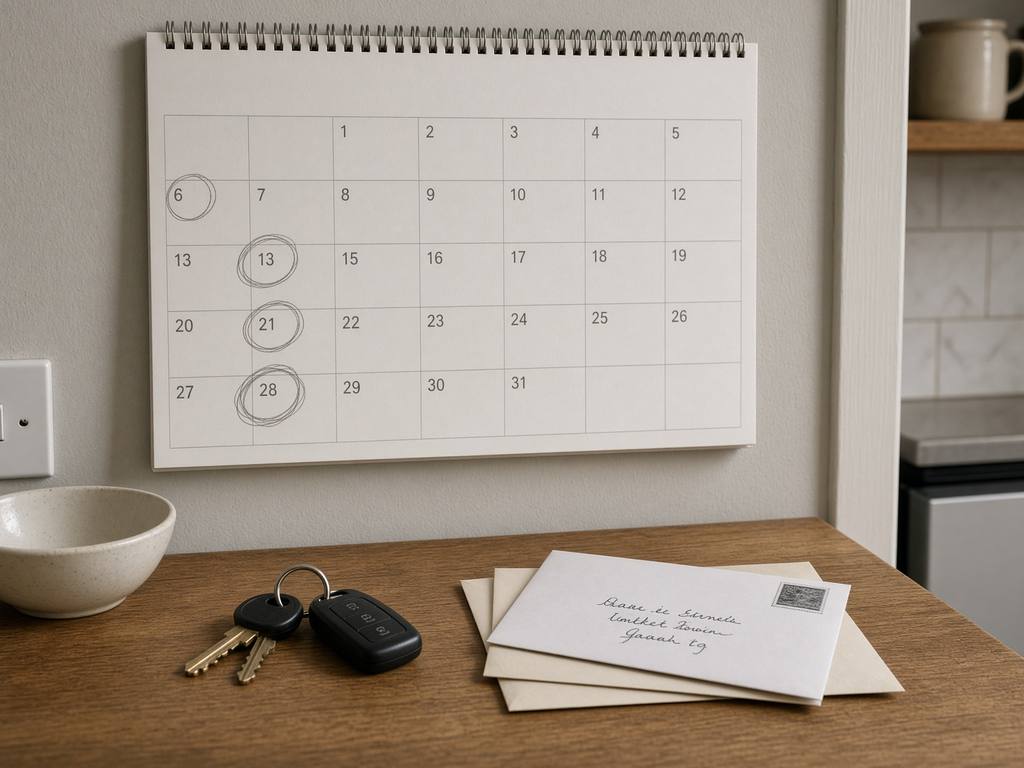
Circle the days money leaves, not only the days it arrives.
When the numbers still do not close, cut from wants, then from subscriptions, then from a bill you can actually switch. Do not start with food or heating in a West Midlands winter. If the gap is structural, read our debt and credit guide and the free services listed there.
Write from Birmingham or call during UK office hours. We help households lay out a budget they can actually keep, not a spreadsheet they abandon in March.